Roseville’s transformation from a quiet railroad junction into Placer County’s most populous city brought subdivisions, business parks, and high-density infill onto soils that were never meant to carry that load. The surface tells one story; the subsurface often another. A soil mechanics study cuts through the guesswork by quantifying shear strength, compressibility, and hydraulic behavior before the first yard of concrete is placed. In our work across west Roseville, Pleasant Grove, and the foothill transition zones, we routinely encounter interbedded silts, cemented hardpan, and pockets of lean clay that respond very differently to moisture. Matching the foundation system to that reality is what a properly executed CPT test helps resolve, especially when stratigraphy changes within a single lot.
Roseville sits on Pleistocene alluvium with enough lateral variability that two borings fifty feet apart can show completely different consolidation behavior.
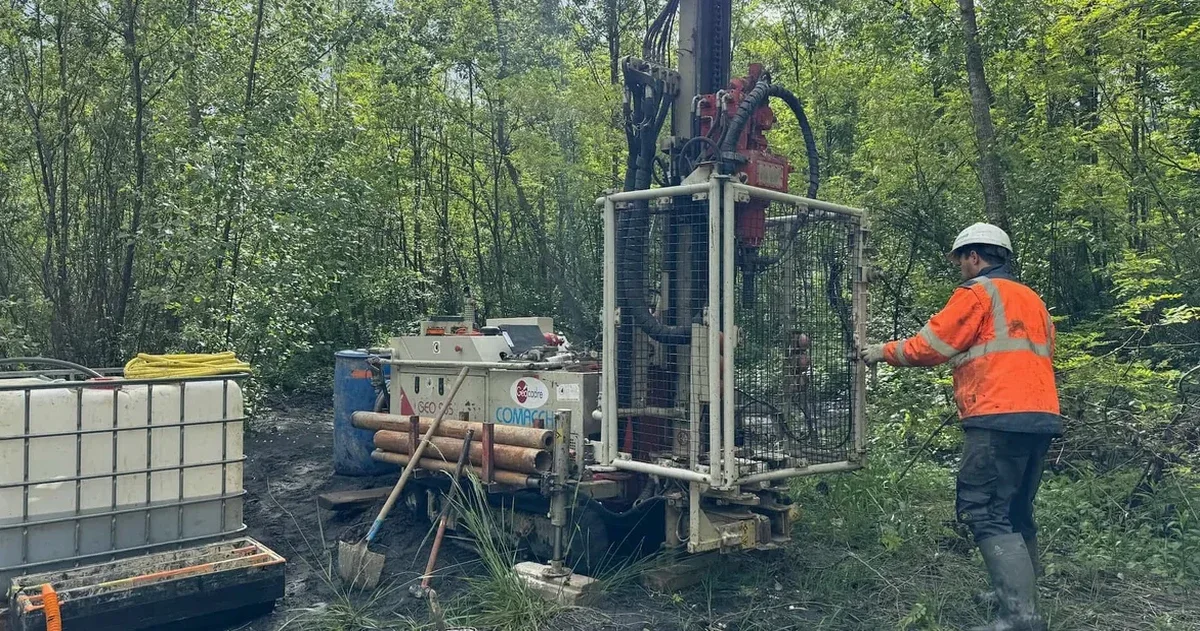
Our approach and scope
Local ground factors
Roseville sits roughly 160 feet above sea level where the Sacramento Valley meets the Sierra foothills, a transition that concentrates both runoff and seismic energy. The city experienced significant shaking during the 1975 Oroville earthquake sequence, and the USGS Quaternary fault database maps several lineaments within Placer County capable of moderate rupture. Expansive claystone derived from the Mehrten Formation underlies much of the eastern half of the city; we have measured swell pressures exceeding 3,500 psf in undisturbed samples taken near Foothills Boulevard. A soil mechanics study that omits expansion potential and dynamic shear response leaves the structural engineer blind to two failure modes that are completely preventable—provided the lab data exists before the framing goes up.
Standards that apply
ASTM D1586 (Standard Penetration Test), ASTM D2487 (Unified Soil Classification System), ASTM D2435 (One-Dimensional Consolidation), ASCE 7-22 (Minimum Design Loads for Buildings), 2022 California Building Code (IBC-based)
Complementary services
Laboratory Strength & Compressibility
Triaxial and consolidation testing under ASTM protocols to determine drained and undrained shear parameters, plus primary and secondary consolidation settlement estimates for Placer County alluvium.
Expansive Soil Characterization
Expansion index, suction testing, and swell-consolidation analysis for claystone and fat clay layers common in east Roseville subdivisions.
Foundation Engineering Report
Integration of soil mechanics data into bearing capacity, settlement, and lateral earth pressure recommendations compliant with the California Building Code and local jurisdiction requirements.
Typical parameters
Quick answers
What does a soil mechanics study include for a Roseville commercial building?
The scope typically starts with hollow-stem auger borings sampled at intervals using Standard Penetration Tests per ASTM D1586. Undisturbed Shelby tube samples go to an AASHTO-accredited lab for triaxial shear, consolidation, Atterberg limits, and grain-size distribution. We then develop bearing capacity, total and differential settlement predictions, and lateral earth pressure coefficients for the foundation design.
How much does a soil mechanics study cost in Roseville?
For a typical commercial lot in Roseville, the soil mechanics study ranges from US$3,460 to US$5,600 depending on the number of borings, depth, and the laboratory testing suite required. Projects with deep fat clay layers or expansive claystone that need additional consolidation or swell testing will trend toward the upper end of that range.
Is expansive soil a real concern in Roseville?
Yes, particularly east of Highway 65 where the Mehrten Formation claystone is near the surface. We have measured swell pressures above 3,000 psf in undisturbed samples. Without a soil mechanics study that quantifies the expansion index and moisture-conditioned strength, post-tensioned slabs and perimeter footings can background distress within the first two wet-dry cycles.
How deep do you typically explore for a Roseville soil mechanics study?
For low-rise commercial buildings on spread footings, we usually explore to 30 to 40 feet below grade, or at least twice the footing width below the bearing elevation. When deeper fat clay lenses are suspected—common in the paleochannel deposits west of Foothills Boulevard—we extend borings to 60 feet to capture the full compressible profile for consolidation analysis.