A three-story mixed-use building off Douglas Boulevard stalled for weeks last year, not because of the structure, but because the soils beneath it told two different stories in just 200 feet. That’s Roseville for you—the transition from granitic residuum to alluvial terrace deposits happens fast, and slab-on-grade optimism doesn’t survive the first round of plan check. Shallow foundation design here depends on knowing exactly which Roseville you’re building on: the hard-packed Pleistocene terraces near the Civic Center, or the silty floodplain lenses that finger out toward Dry Creek. We run plate load tests on the actual bearing stratum before sizing footings, because presumptive values from a county-wide map won’t catch a pocket of undocumented fill left over from the 1970s subdivision boom. When the upper five feet look marginal, we also pull grain size curves on split-spoon samples to confirm whether fines content is going to drive settlement calculations. The goal isn’t just a passing report—it’s a foundation that handles Roseville’s swelling clay without callbacks.
A shallow foundation in Placer County isn’t just a bearing check—it’s a moisture-management strategy for soils that swell 10% by volume between August and January.
Our approach and scope
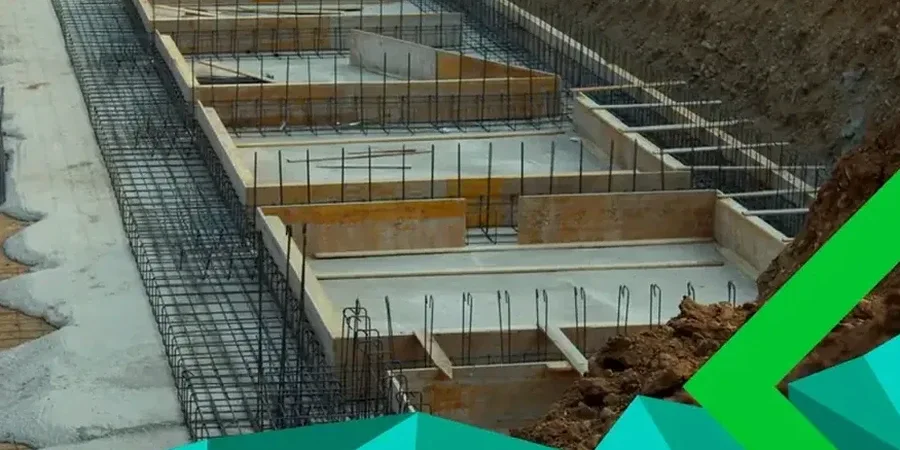
Local ground factors
One thing we see repeatedly in Roseville subdivisions from the early 2000s is exterior slab corners that settle toward the street while the interior stays put—almost always a combination of poorly compacted utility trench backfill and lateral moisture migration under the driveway. Shallow foundation design that ignores the utility corridor is a gamble, especially where PG&E gas lines run parallel to the footing line in the front setback. The IBC addresses this through Section 1805 on footings adjacent to descending surfaces, but enforcement is spotty at the rough-in stage. A second pattern is post-construction swelling under garage slabs when downspouts discharge within five feet of the perimeter; the moisture drives the clay’s heave potential right where the floor slab meets the interior bearing wall. Our reports flag these micro-drainage issues explicitly because a $200 downspout extension is cheaper than chasing cracks through a polished concrete floor a year after move-in.
Watch the video
Standards that apply
ASCE 7-22 (Minimum Design Loads and Associated Criteria for Buildings and Other Structures), 2022 California Building Code (IBC with state amendments, Title 24 Part 2), ASTM D1586 (Standard Penetration Test and Split-Barrel Sampling of Soils), ASTM D2487 (Unified Soil Classification System), ASTM D1194/D1194M (Plate Load Test — withdrawn but still referenced in practice)
Complementary services
Bearing capacity & settlement analysis
Site-specific allowable bearing pressure derived from SPT N-values, CPT tip resistance, or laboratory shear strength data. We model immediate and consolidation settlement per the Placer County grading ordinance requirements.
Expansive soil mitigation design
Moisture barrier recommendations, under-slab drainage layers, deepened perimeter footings, and post-tensioned slab-on-grade specifications tailored to Roseville’s mapped clay units.
IBC/CRC submittal package preparation
Geotechnical reports formatted for City of Roseville Building Division review, including seismic site class determination per ASCE 7, liquefaction screening, and special inspection recommendations.
Typical parameters
Quick answers
What does shallow foundation design cost for a typical single-family lot in Roseville?
For a standard residential parcel in Roseville—say 6,000 to 10,000 square feet with the home footprint under 3,000 square feet—a geotechnical investigation and shallow foundation design report typically runs between US$1,690 and US$2,850. The range depends on access constraints, depth to competent bearing, and whether the City asks for a liquefaction assessment. Custom hillside lots or sites with undocumented fill can push toward the upper end because we’ll need additional borings or CPT soundings to map the variability.
How deep do footings need to go in Roseville’s expansive soils?
Most Roseville residential footings land between 18 and 24 inches below finished grade, driven less by frost—Placer County sits in USDA zone 9b—and more by the active zone of moisture fluctuation in the clay. The 2022 California Building Code requires a minimum 12-inch embedment, but we almost always recommend 18 inches minimum for exterior footings to get below the worst of the seasonal heave. Interior isolated footings on high-PI soils may need deepened sections or a capillary break layer. If you’re near a creek corridor like Linda Creek, depth-to-groundwater can also influence the final embedment number.
Is a shallow foundation viable on fill lots in older Roseville neighborhoods?
It depends entirely on the nature and age of the fill. Pre-1990 undocumented fill in central Roseville neighborhoods near Vernon Street can be surprisingly stiff if it’s been consolidating under its own weight for 40-plus years, but we’ve also hit pockets of construction debris and organics that won’t support a shallow footing without overexcavation. We typically run a CPT alongside a couple of SPT borings to map the fill thickness and consistency. If the fill is less than five feet and the underlying natural soil is competent, shallow foundations are often feasible with a compacted engineered fill replacement. For thicker or uncontrolled fill, we’ll discuss whether an alternative like a mat foundation or even deep foundations makes more sense before you commit to a design path.