A frequent miscalculation we see in Roseville is assuming that moderate ground conditions can be resolved with shallow over-excavation alone, only to face differential settlement within the first two years after the slab is poured. The eastern edges of the Sacramento Valley hide unpredictable lenses of uncontrolled fill and soft alluvial deposits that compact poorly under standard surcharge. When a structural engineer calls us after the first round of soil borings comes back with blow counts under four, the conversation shifts quickly to deep ground improvement. Stone column design becomes the logical path—not because it is the cheapest line item on bid day, but because it eliminates the long-term liability of repairing cracked partitions and tilted floor slabs. For sites near the Roseville railyard or the expanding industrial parks along Highway 65, we combine field data from CPT testing with settlement tolerance criteria to define the column grid, diameter, and depth that will bring performance within the project's allowable limits.
In Roseville's shallow groundwater and interbedded fines, stone columns cut post-construction settlement by half or more when designed with site-specific modulus values.
Our approach and scope
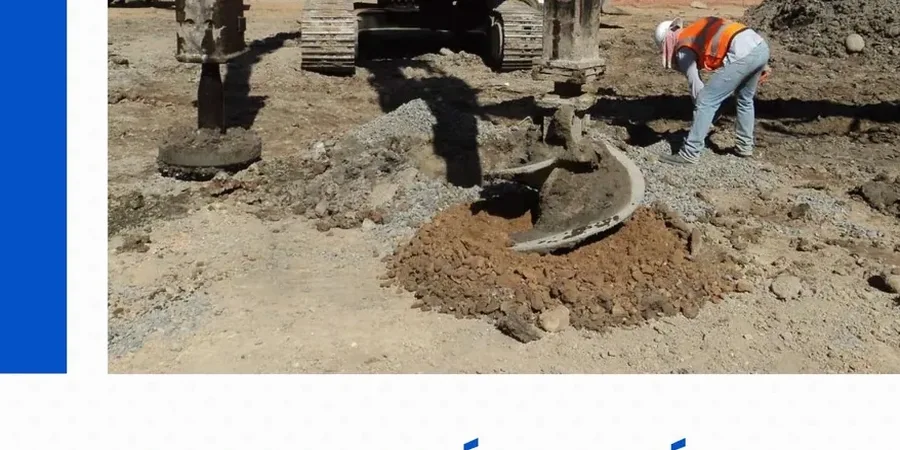
Local ground factors
Roseville sits at approximately 160 feet above sea level, but what matters for foundation design is the 30 to 50 feet of recent alluvium that lies beneath that elevation. A 2016 commercial project near Blue Oaks Boulevard—on what appeared to be competent sandy silt—recorded over 4 inches of differential settlement within 18 months of certificate of occupancy, traced back to a buried channel fill that the original investigation missed. A retrofit with stone columns stopped the movement cold, but the business interruption and structural repairs had already cost the owner a multiple of what a proper ground improvement campaign would have. The lesson is not that soils in Roseville are inherently bad; it is that the variability over short distances demands a design that accounts for the weakest pocket, not the average. We apply a factor of safety of 1.3 to 1.5 on the target settlement ratio and run sensitivity analyses on column stiffness to ensure that even if the as-built diameter varies by an inch, the foundation slab still performs within the angular distortion limits set by the structural engineer.
Watch the video
Standards that apply
ASTM D1586 – Standard Test Method for Standard Penetration Test (SPT), ASTM D2487 – Standard Practice for Classification of Soils for Engineering Purposes, ASCE 7 – Minimum Design Loads and Associated Criteria for Buildings, IBC – International Building Code (Chapter 18 on Soils and Foundations)
Complementary services
Feasibility and settlement analysis
We run column group analyses using the Priebe method and 3D finite element models when irregular layouts or adjacent footings create interaction effects that simplified charts cannot capture.
Installation specification and QA/QC
We prepare technical specs with aggregate gradation, depth criteria, and acceptance testing via post-installation CPT or plate load tests that confirm the improvement factor achieved.
Forensic review of underperforming ground
When existing slabs show distress, we design targeted stone column arrays to arrest ongoing settlement without demolishing the structure, using small-diameter rigs that work inside low-clearance buildings.
Typical parameters
Quick answers
What is the typical cost range for a stone column design package in Roseville?
For most commercial and light industrial sites in the Roseville area, the design package—including settlement analysis, column layout drawings, and installation specifications—ranges from US$1,290 to US$5,380 depending on building footprint and the number of exploratory borings that must be interpreted.
How do you decide between stone columns and rigid inclusions for a Roseville site?
The choice hinges on the allowable total settlement and the structural loads. Stone columns work best when the soil can still share load with the columns and settlement reduction factors between 2 and 3 are sufficient. If the project demands near-zero settlement—like a high-bay automated warehouse—we may recommend rigid inclusions instead, but for most tilt-up and steel-frame buildings in Roseville, stone columns supply the right balance of performance and cost.
What quality control tests confirm the stone columns are performing as designed?
We specify post-installation modulus tests on a representative column, or CPT soundings through the treated zone at 7 to 14 days after installation. The shear wave velocity profile and tip resistance must meet the target values established during design, and we compare the actual area replacement ratio against the specification to sign off on the ground improvement.