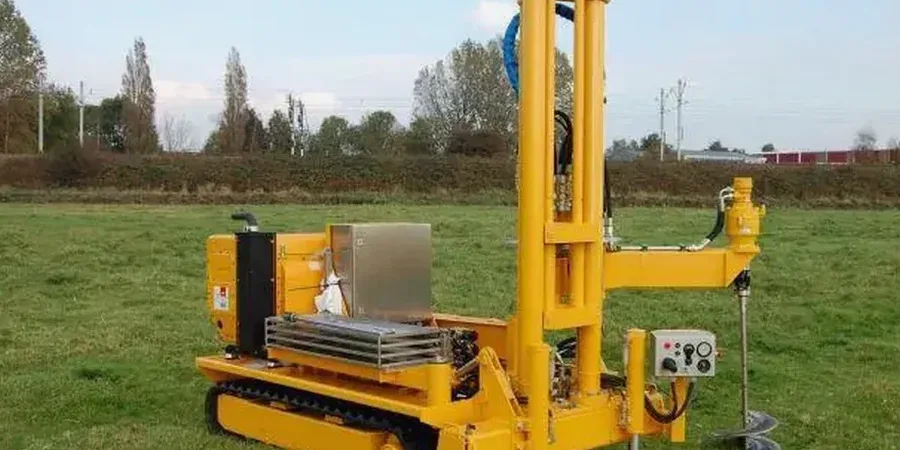
Roseville’s growth from a railroad junction to a city of over 150,000 means construction keeps pushing into areas with complex alluvial deposits. The American River and Dry Creek watersheds left behind layered silts, sands, and occasional gravel lenses that standard penetration testing alone can miss. For projects anywhere from West Roseville to the downtown corridor, CPT testing delivers a near-continuous soil profile that reveals thin soft seams and transition zones. We deploy a 20-ton cone rig with seismic capability and pore pressure measurement following ASTM D5778, giving our team shear wave velocity data directly from the cone and a clear picture of subsurface stratigraphy before a single foundation element is sized.
A single CPT sounding in Roseville alluvium can replace six SPT borings for stratigraphic profiling, cutting field time while multiplying data density.
Our approach and scope
Local ground factors
Roseville sits in a region where summer soil cracking and winter saturation alternate sharply, and the city’s position east of the Sacramento Valley means moderate seismicity from faults like the Cleveland Hills system. A soil profile interpreted from low-resolution borings can miss a thin loose sand lens that becomes a shear plane during shaking. CPT data catches those lenses because the cone reads every centimeter. We also check for sensitive clays by monitoring the pore pressure response during dissipation; a high sensitivity ratio warns of strength loss under cyclic loading. Overlooking these details risks differential settlement, tilt in shallow footings, or an unconservative liquefaction assessment. The CPT’s repeatability means we can verify conditions at multiple locations in a single day, reducing the chance that a localized anomaly goes undetected beneath a mat foundation or a retaining wall alignment.
Standards that apply
ASTM D5778-20 – Standard Test Method for Electronic Friction Cone and Piezocone Penetration Testing of Soils, ASCE 7-22 – Minimum Design Loads and Associated Criteria for Buildings, IBC 2021 (California Building Code adoption) – Chapter 16 Structural Design, Chapter 18 Soils and Foundations, ASTM D7400 – Standard Test Methods for Downhole Seismic Testing
Complementary services
Piezocone Penetration (CPTu)
Standard push with U2 pore pressure measurement. Includes corrected cone resistance, sleeve friction, friction ratio, and pore pressure ratio logs. Suitable for stratigraphy, bearing capacity, and settlement estimates.
Seismic CPT (SCPTu)
Same as CPTu plus a seismic module that records shear wave arrivals at 1 m intervals. Delivers true-interval Vs profiles for site class determination per ASCE 7 and modulus reduction curves for dynamic analysis.
Dissipation Testing Package
Stops the push at pre-selected depths to record pore pressure decay over time. Gives horizontal coefficient of consolidation and in situ equilibrium pore pressure, both critical for time-rate settlement and flow modeling.
Typical parameters
Quick answers
What does a CPT test cost in Roseville?
Budget between US$190 and US$240 per push for standard CPTu in Roseville, assuming reasonable access and depths under 60 feet. Seismic CPT adds about 15-20%. Mob-demob and traffic control on busier streets like Pleasant Grove Boulevard may increase the total. A full proposal breaks out line items so you see exactly what drives the number.
How deep can the cone rig push in Placer County soils?
Our local rig achieves 100 feet in most Roseville profiles, but refusal can occur earlier in dense gravels or cemented hardpan. We pre-drill through known hard layers when the subsurface investigation indicates thick cobble zones, which extends the reachable depth.
Do I still need borings if I run CPT?
CPT gives a continuous strength and stratigraphy log, but it does not recover a physical sample. Most projects pair CPT with at least one soil boring or test pit to verify soil type and run index tests. This combined approach satisfies both the geotechnical data density requirement and the need for lab classification.
How fast can you mobilize to a Roseville site?
Typical lead time for a standard CPT job within Roseville city limits is 3 to 5 business days. We pull Placer County encroachment permits when the push site is in the public right-of-way, and that may add a few days depending on the street classification.
What parameters do I get for liquefaction analysis?
The CPT deliverable includes normalized tip resistance, friction ratio, and soil behavior type index at every centimeter. We also supply the input file formatted for common liquefaction software, with shear wave velocity from SCPTu when that module is deployed. You get the raw data plus a summary table of factor of safety against liquefaction for the design earthquake.